
.png)
Share this
.png)
Summary: This infographic outlines a six-stage manual testing framework—from defining requirements & risks, through designing test cases, planning runs, executing tests, tracking issues, and reporting results—which delivers streamlined collaboration, traceability, and enhanced QA outcomes when managed using platforms like TestMonitor.
In our infographic below, we break our manual software testing recommendations down into six simple stages to help you create a structured testing environment. Happy testing!
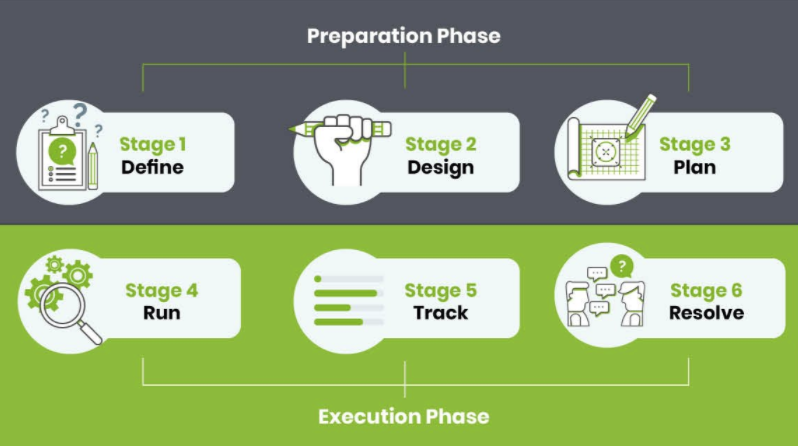
Looking to save this infographic for later? Click HERE for a PDF version.

Looking to save this infographic for later? Click HERE for a PDF version.
They are: (1) define requirements & risks, (2) design test suites and test cases, (3) plan test runs around milestones, (4) execute tests, (5) track and manage issues, and (6) report on quality outcomes, coverage, and progress.
Establishing clear, stakeholder-aligned requirements and risk profiles early provides a structured foundation that guides the scope and focus of all subsequent testing activities.
It ensures traceable coverage, highlights gaps or redundant work, and directs focus to high-impact areas—making test execution more meaningful and coordinated.
Central issue tracking tied to specific test runs allows teams to document defects with context, prioritize work, and link results back to requirements and test cases—improving clarity and resolution efficiency.
