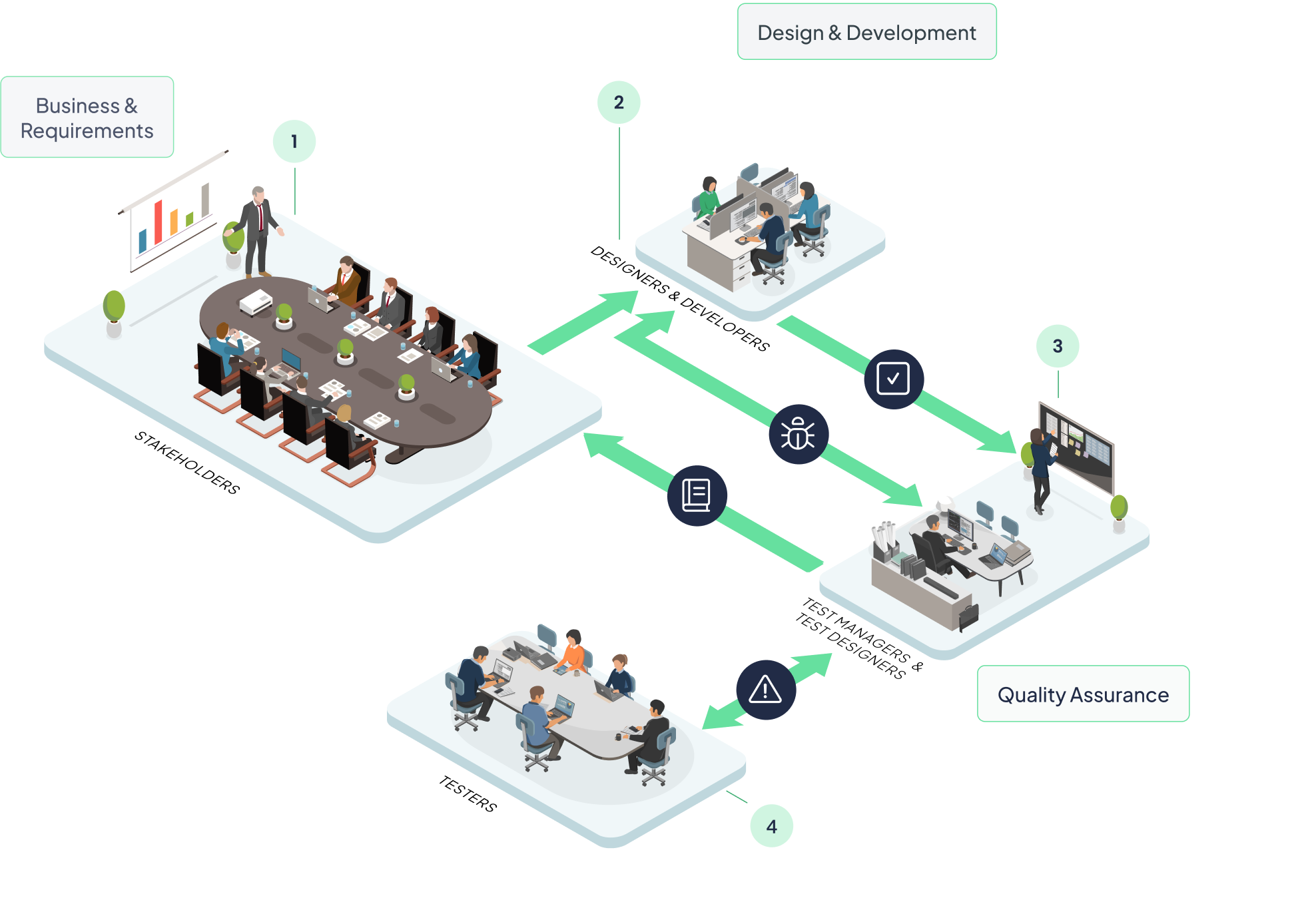
An Efficient Lifecycle with TestMonitor
1. Requirements and Risks Defined & Communicated
This initial phase sets the foundation for your entire project. Stakeholders translate business goals into functional requirements and identify potential project risks. While this phase typically occurs through your team’s existing planning sessions and documentation, it serves as the critical "source of truth" that ensures developers and designers are building toward the correct objective from day one.
2. Requirement and Risk Management
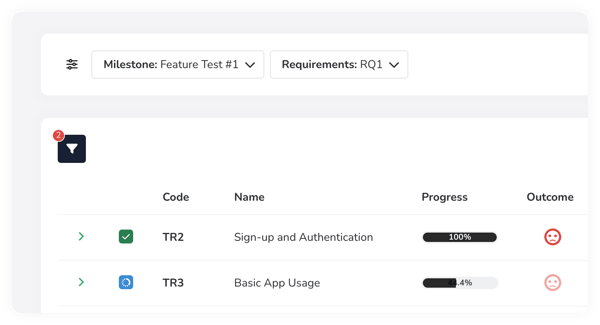
Bridging the gap between design and testing is where structural integrity begins. Instead of letting requirements live in static documents, TestMonitor allows you to transform them into a dynamic roadmap. By mapping each requirement directly to a test case, you ensure 100% coverage and eliminate the "guesswork" often found in messy spreadsheets, allowing you to organize your test runs with precision.
TestMonitor Features
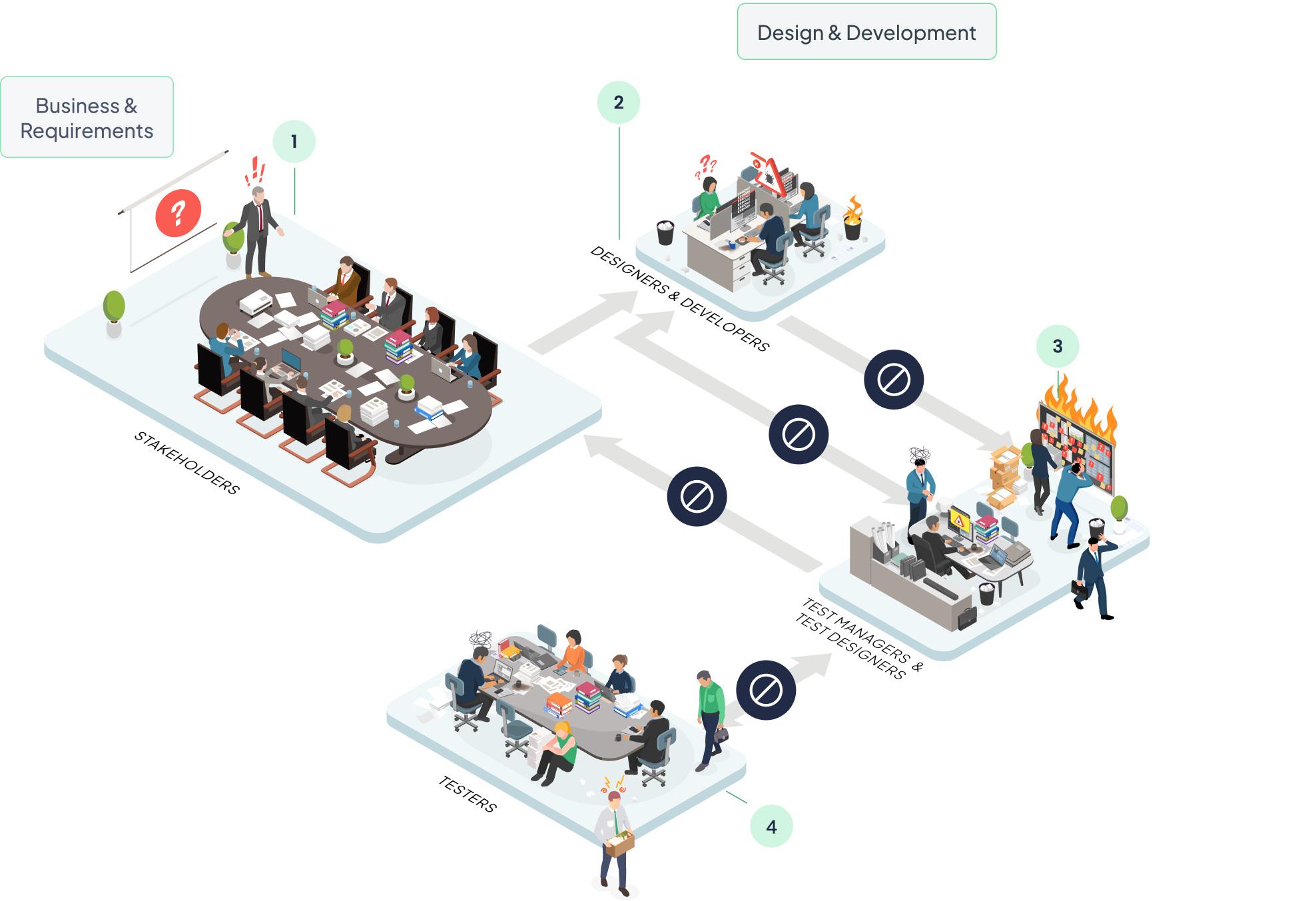
Without TestMonitor
Teams are forced to track requirements and risks through messy spreadsheets and inconsistent, error‑prone processes.
3. Issue Tracking, Resolution, and Progress Reporting
Efficiency in QA is defined by how quickly a bug is identified, communicated, and squashed. This stage facilitates a seamless loop between your testers and your development team. Rather than working in silos, issues are tracked in real-time with all the necessary context. Whether using native tools or syncing with your existing dev stack, this ensures that every "fail" moves toward a "fix" without losing information in transition. As issues are resolved, real-time reporting transforms that progress into actionable intelligence — giving stakeholders a transparent view of software health and release readiness backed by a traceability matrix, not gut feelings.
TestMonitor Features
Without TestMonitor
Bugs are routed through siloed, uncoordinated systems — slowing resolution and leaving stakeholders guessing about software quality and release readiness with no clear line of sight from issue to outcome.
4. Execution Planning and Assignment
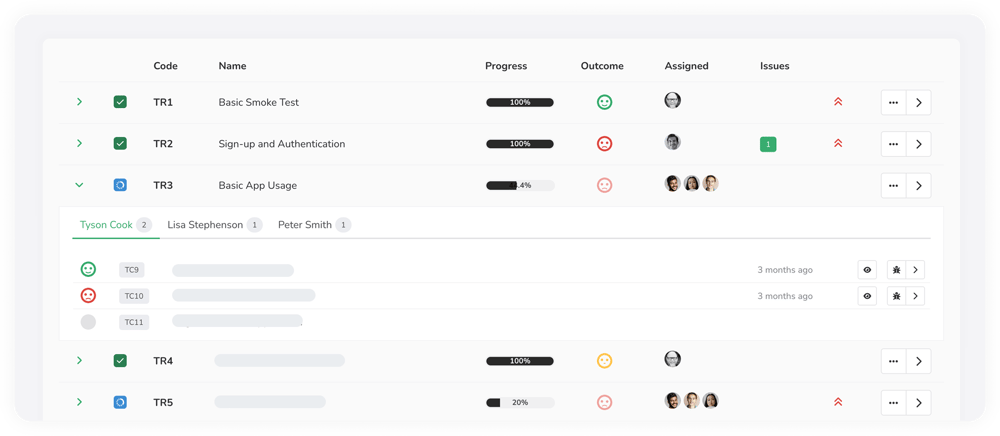
Coordination is the heart of a successful test cycle. At this stage, test managers take the lead, assigning specific runs to the right testers and monitoring progress through a centralized lens. This eliminates overlapping efforts and provides the team with a clear, structured environment to capture results. By simplifying the "who, what, and when," you can scale your testing activities without increasing the management overhead.
TestMonitor Features
Without TestMonitor
Teams are forced to coordinate testing through siloed systems and other unorganized methods, leaving them without clear visibility into progress, overlapping issues, or outcomes.