



The needs?
You are ready to start choosing a Test Management tool. The first and most logical step is to be sure about the needs of your organization or project. To clarify the needs, it is sensible to involve not only the project team or test or QA team but also other stakeholders, such as the clients, steering committee, etc. When the needs are precise, you can start investigating different tools.
Selection criteria
To make the selection a bit easier, we created a list of criteria, which provide a direction for a correct comparison. The tool must be able to define requirements, design test cases, run your test, track test results, resolve issues, and create reports of all objects. Defining requirements and risks are essential to describe the requirements and wishes of the software to be tested. Designing your test suites and creating test cases are perhaps the most important thing. Without test cases, you can't test at all.
But the relationship between these objects can also be interesting. When planning the test, you may want to duplicate previously created milestones in their entirety, which is a real time saver and excludes test plan headaches (:o)). The simplicity of running a test can be important criteria depending on what kind of people are doing the manual testing. Are they trained professionals or end-users. Whether or not you can create issues during the test run can be important.
Another criteria can be the way of tracking all the test results. Can you analyze this per test case or per test run or both ways? We often hear positive feedback on the integrated issue management. TestMonitor allows you to keep all issues for every stakeholder in one central depository.
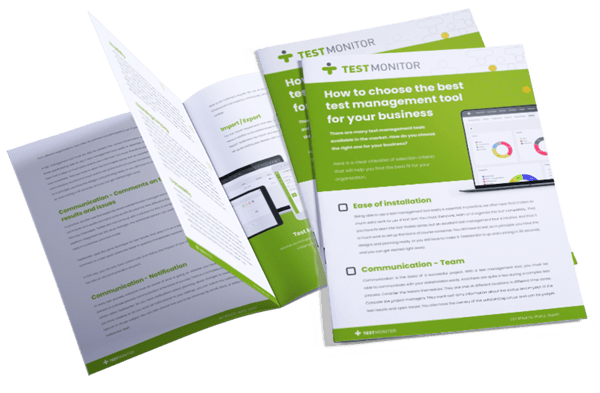
To put all these questions in the right structure, we have made a checklist with the most important criteria. You can download the checklist here.

Start testing with TestMonitor
If you need assistance or if you have any questions regarding TestMonitor, feel free to contact us at any time. We are here to help.
